
Štefan Papčo | Becoming
curated by Silvia Van Espen
13 Dec 2025 – 27 March 2026
Zahorian & Van Espen Mierová, Bratislava
Only in art does a missing part contribute to the overall meaning. (1)
The exhibition Becoming presents a set of recent works by Štefan Papčo (1983), continuing his reflections on transitional states, thresholds, and forms of experience where matter, body, and consciousness meet. Papčo has long incorporated the “grammar” of mountaineering into his work, suggesting that art—much like climbing—is a form of searching that aims not at conquering or mastering, but at attaining clarity: acknowledging fragility, accepting incompleteness, and understanding that the “missing part” can contribute to the meaning of the whole.
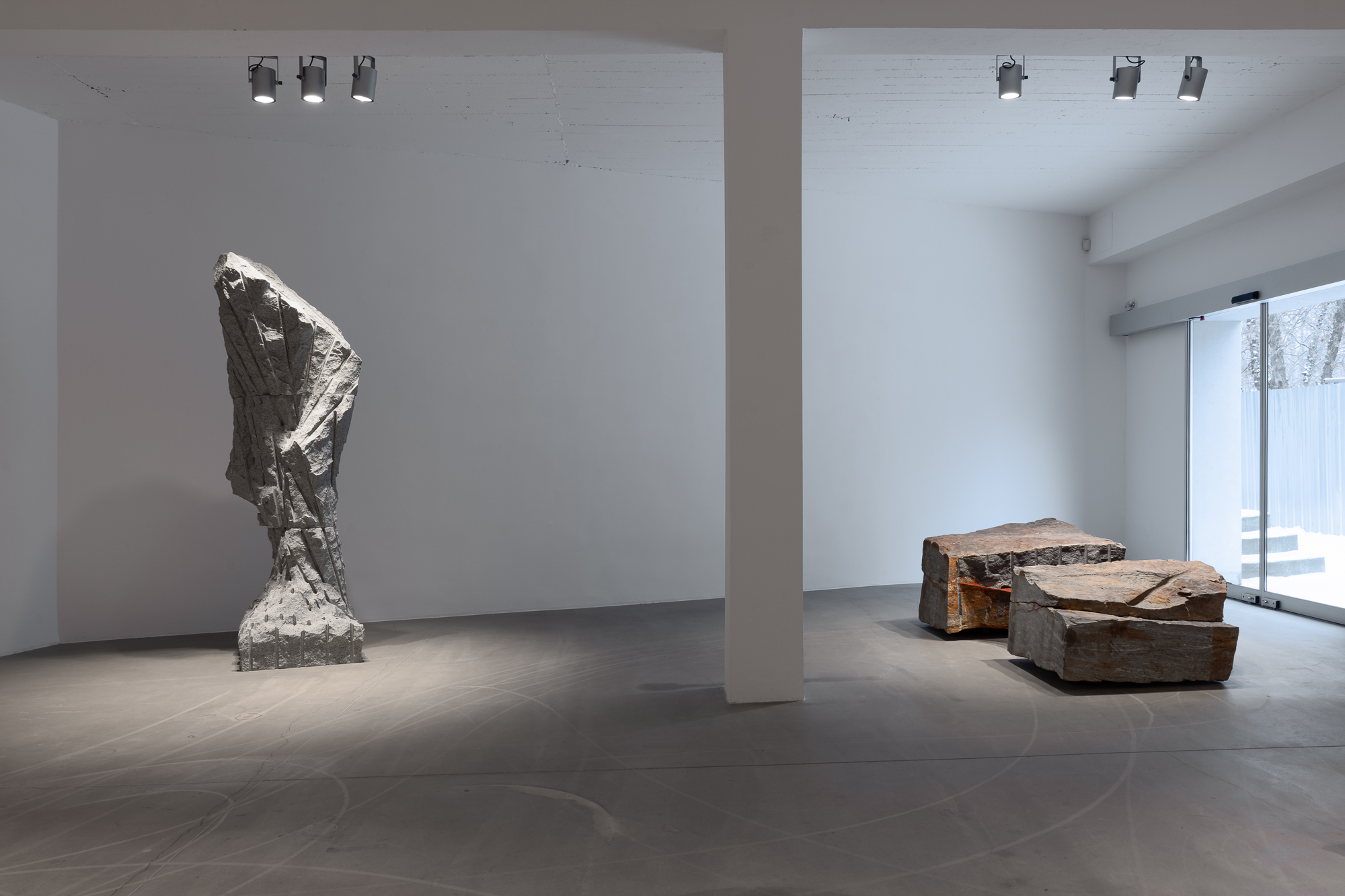
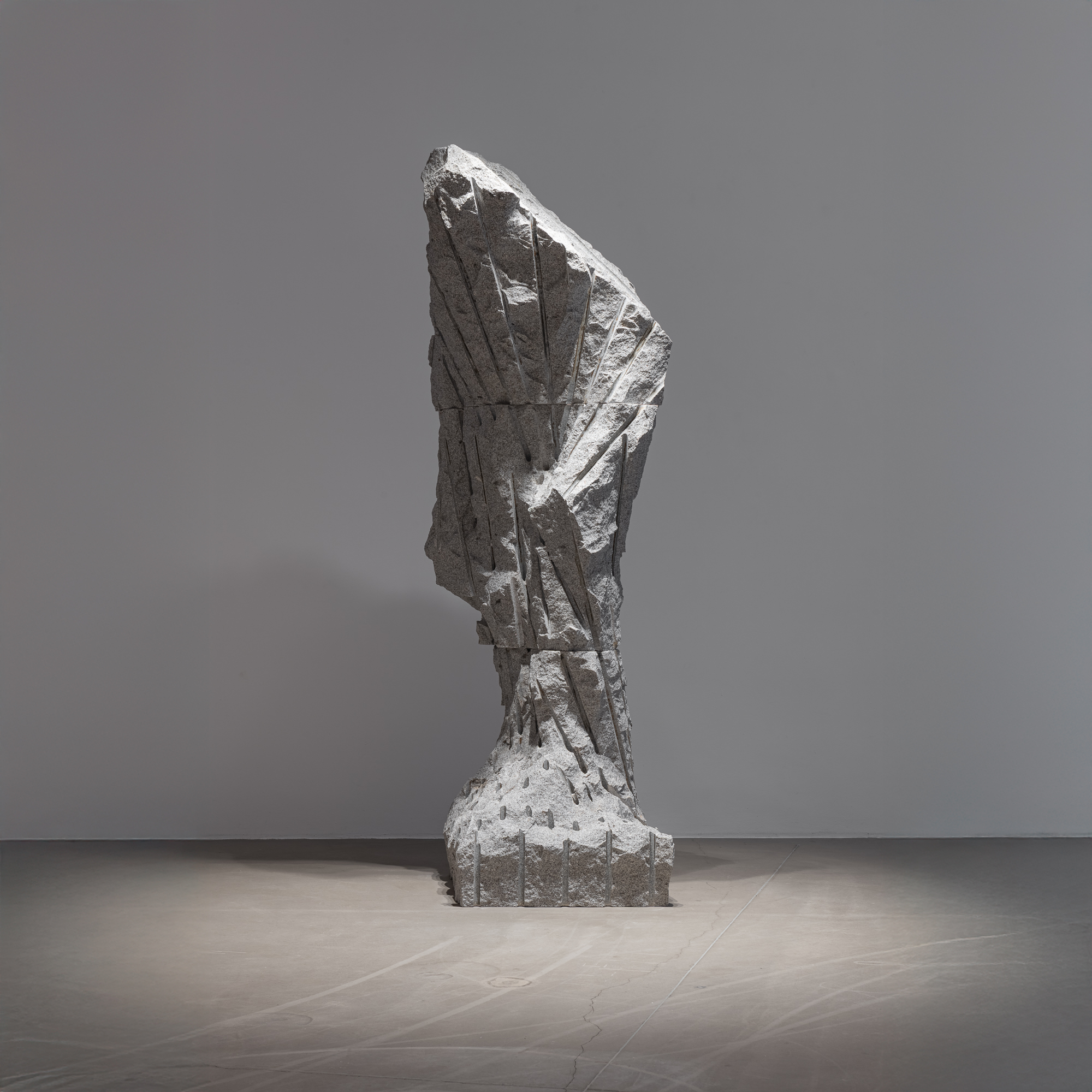
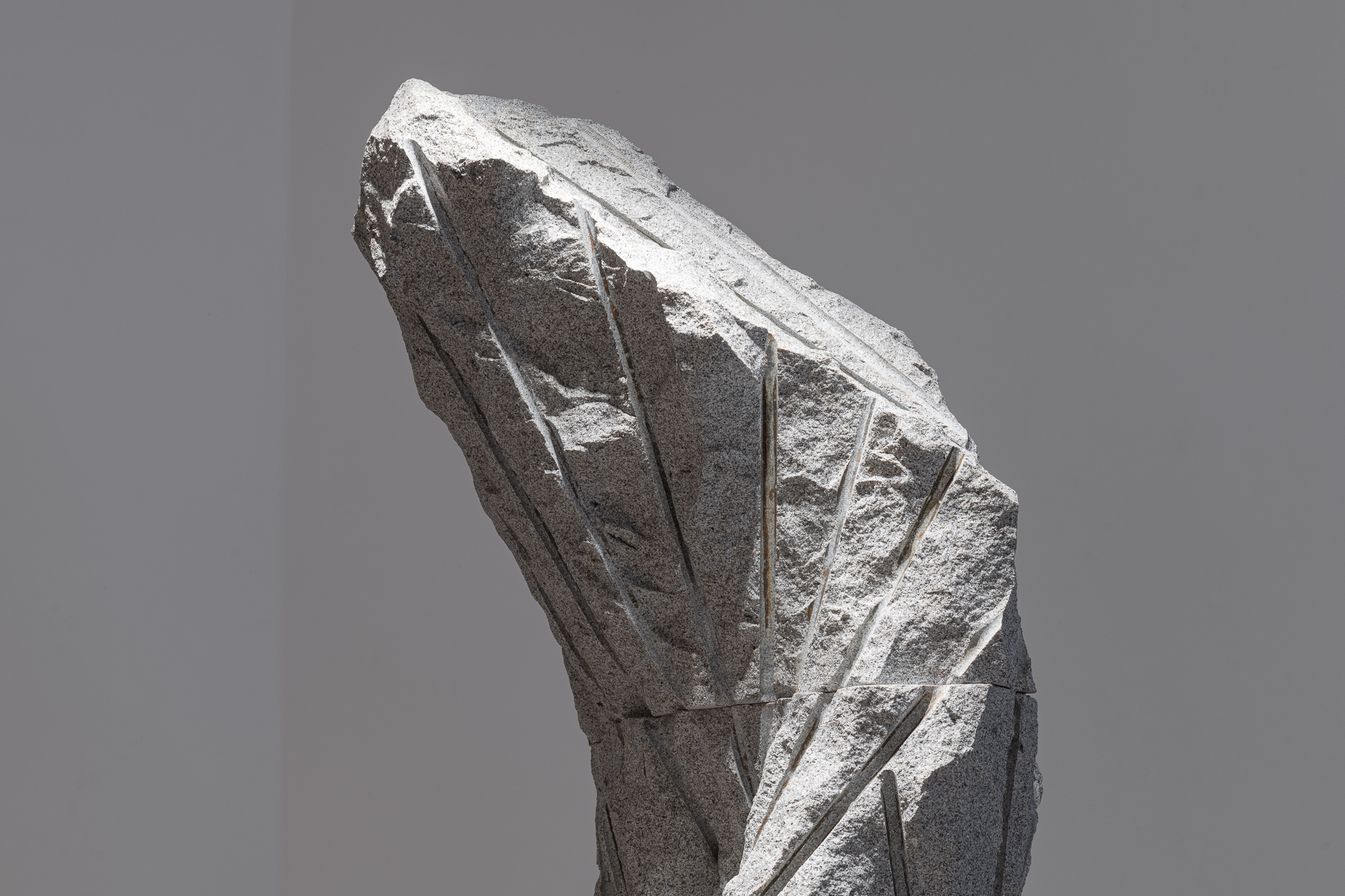
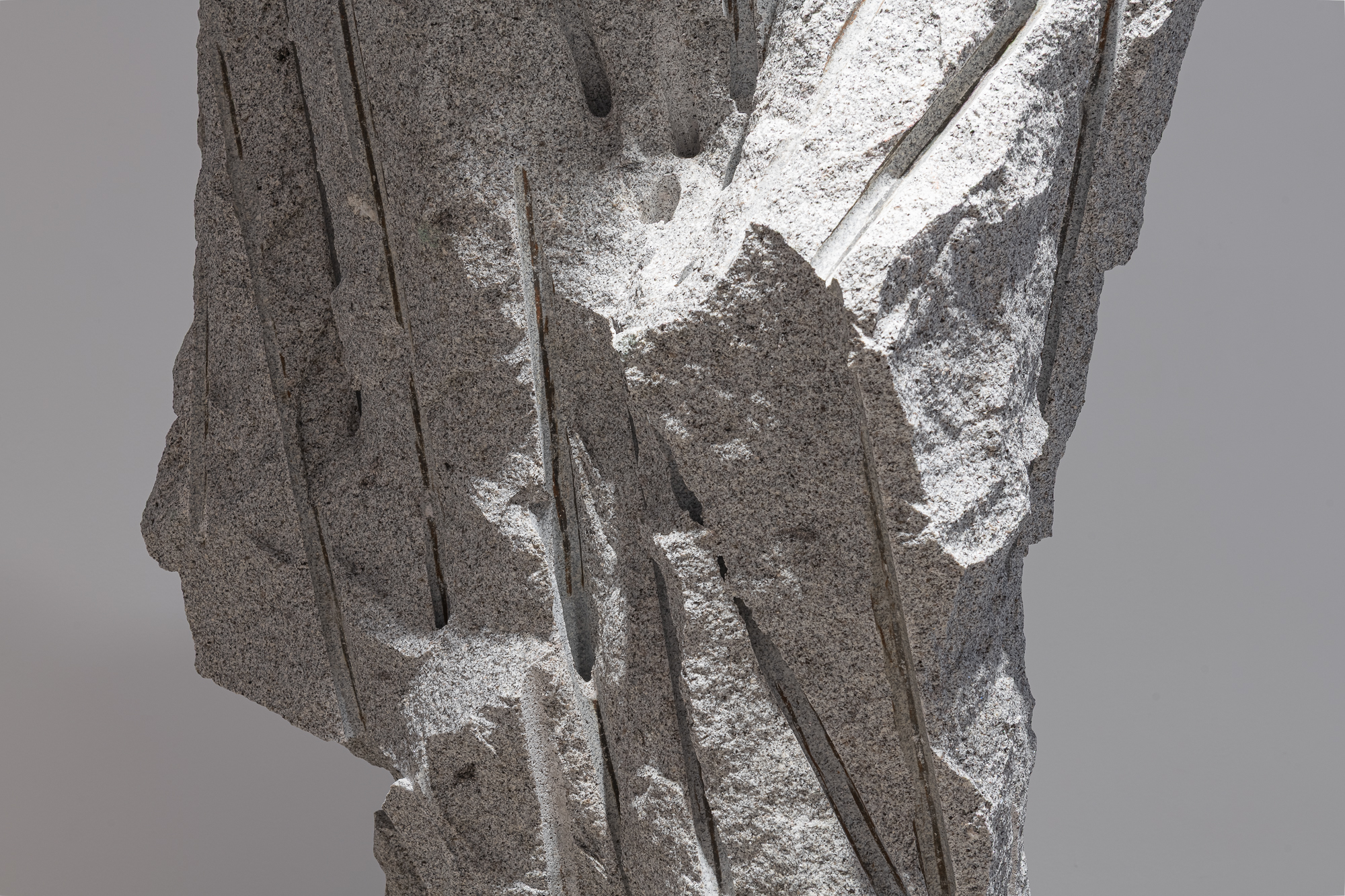
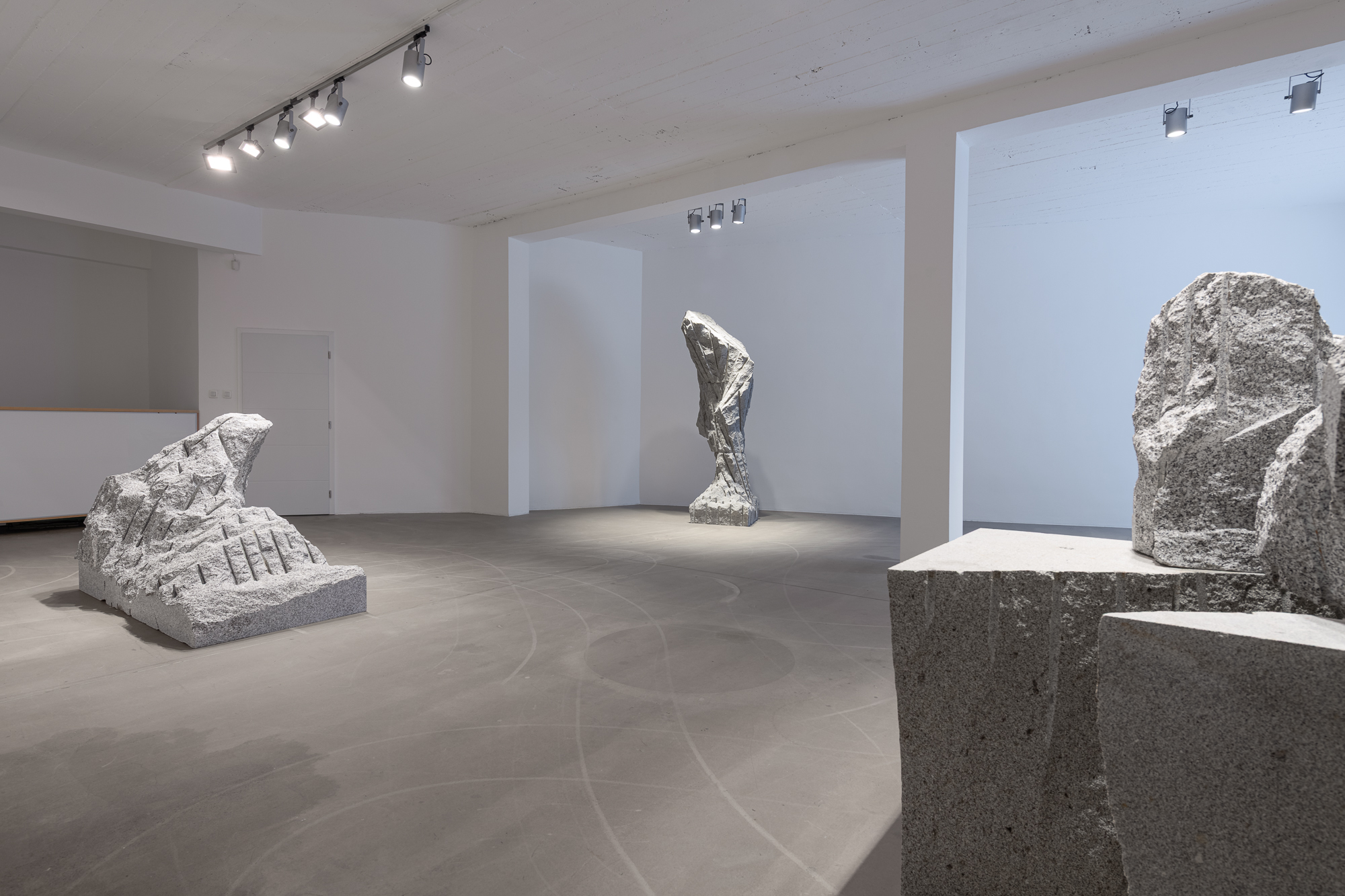
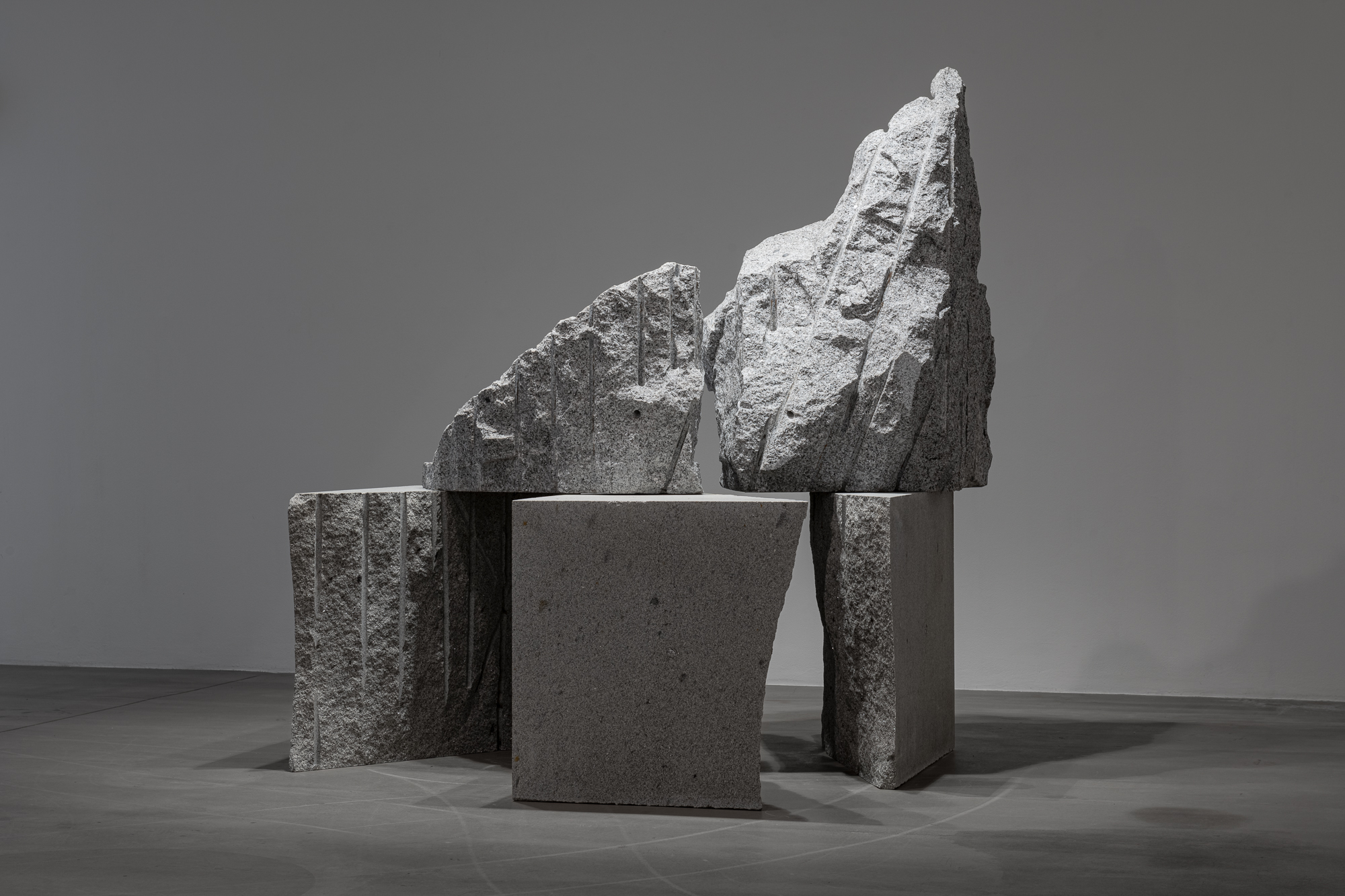
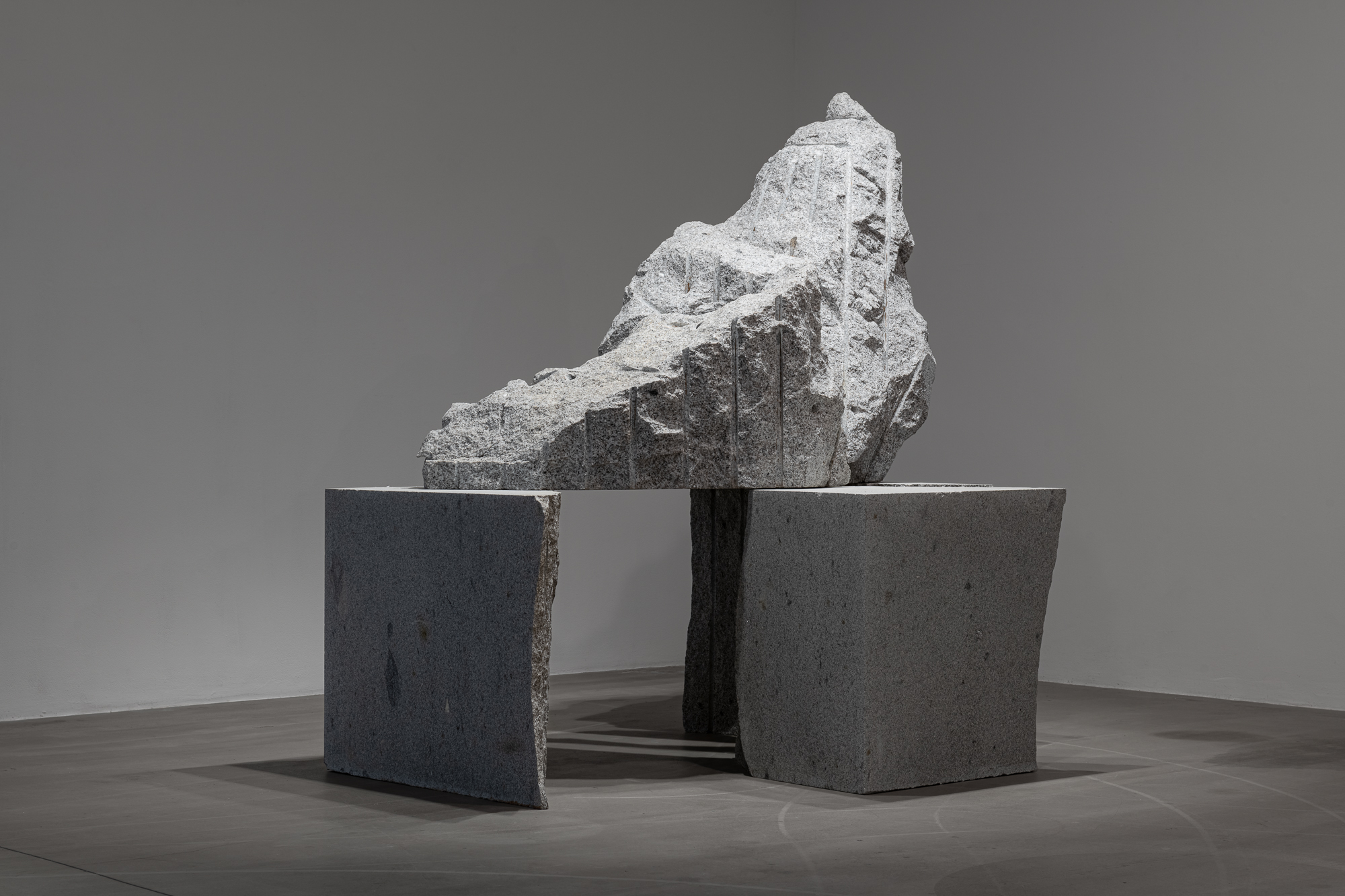
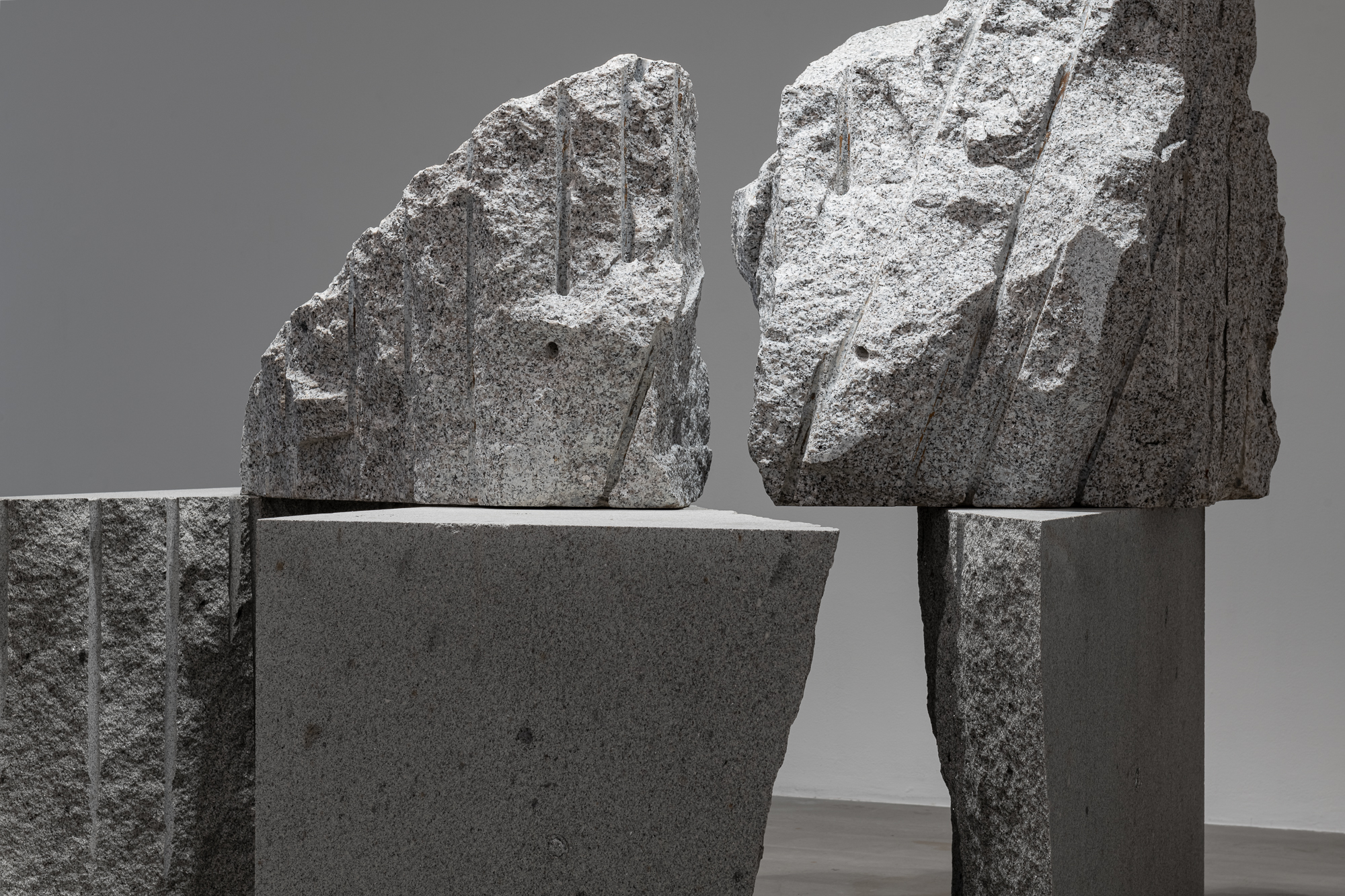
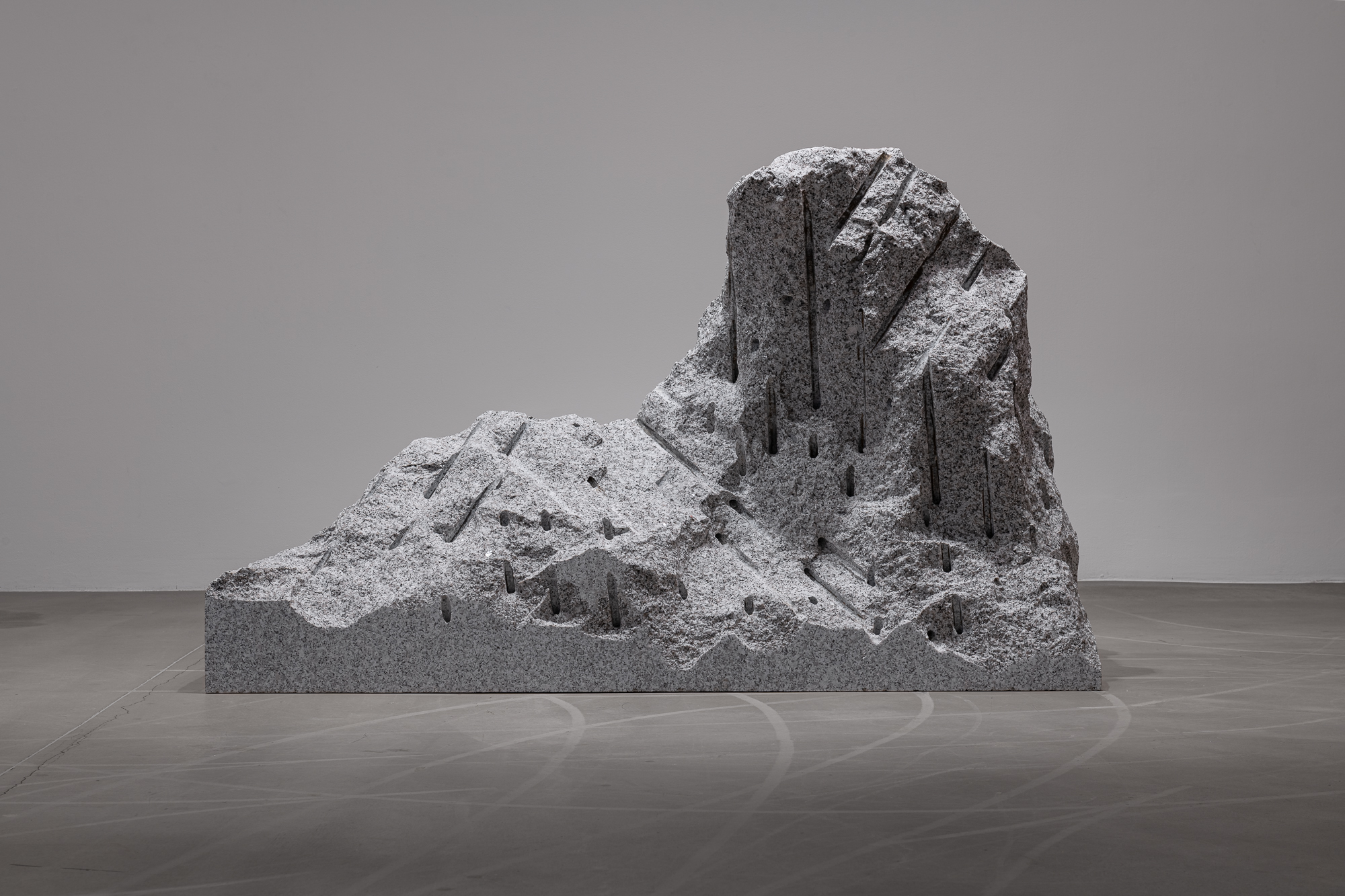
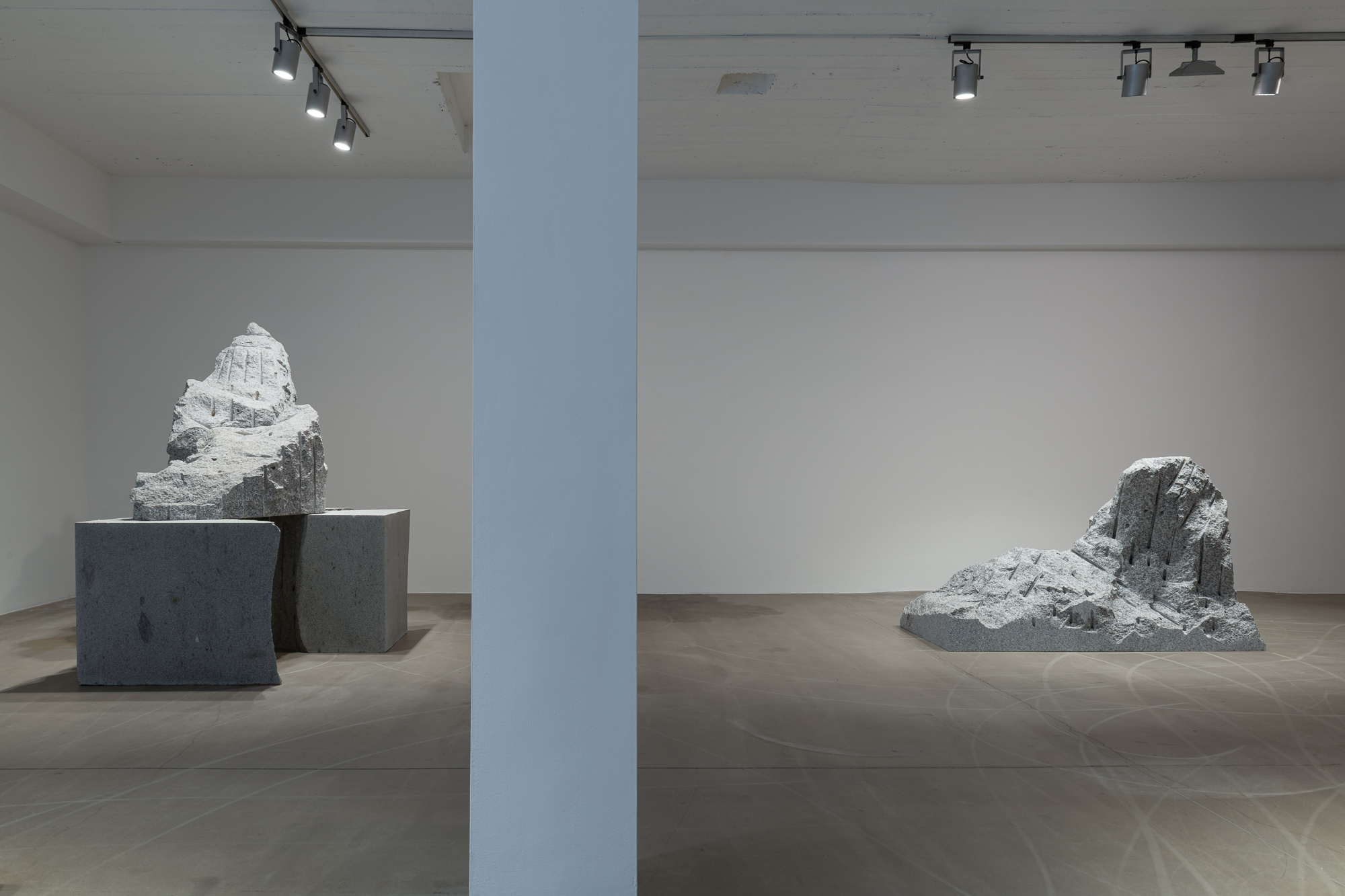
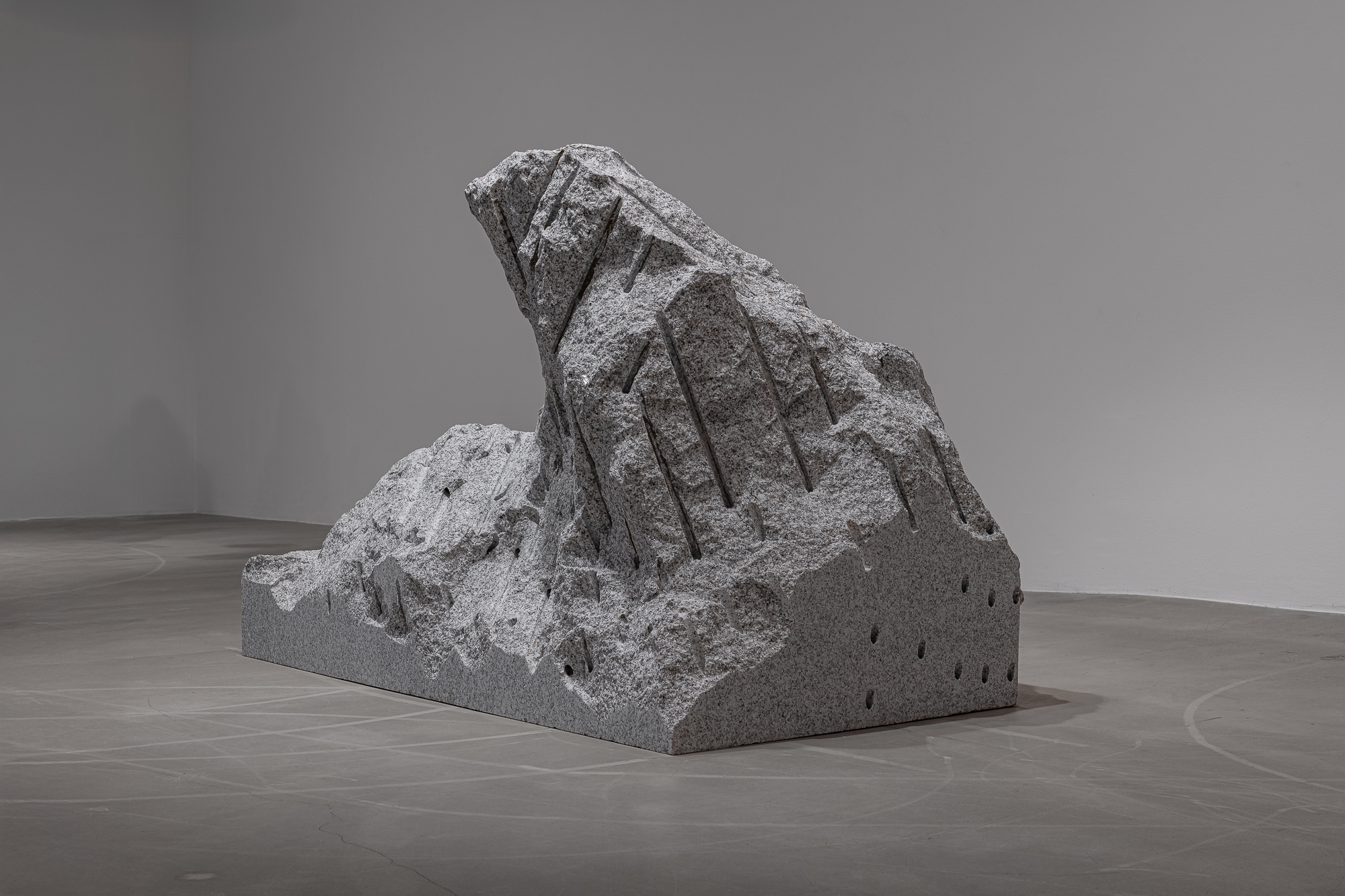
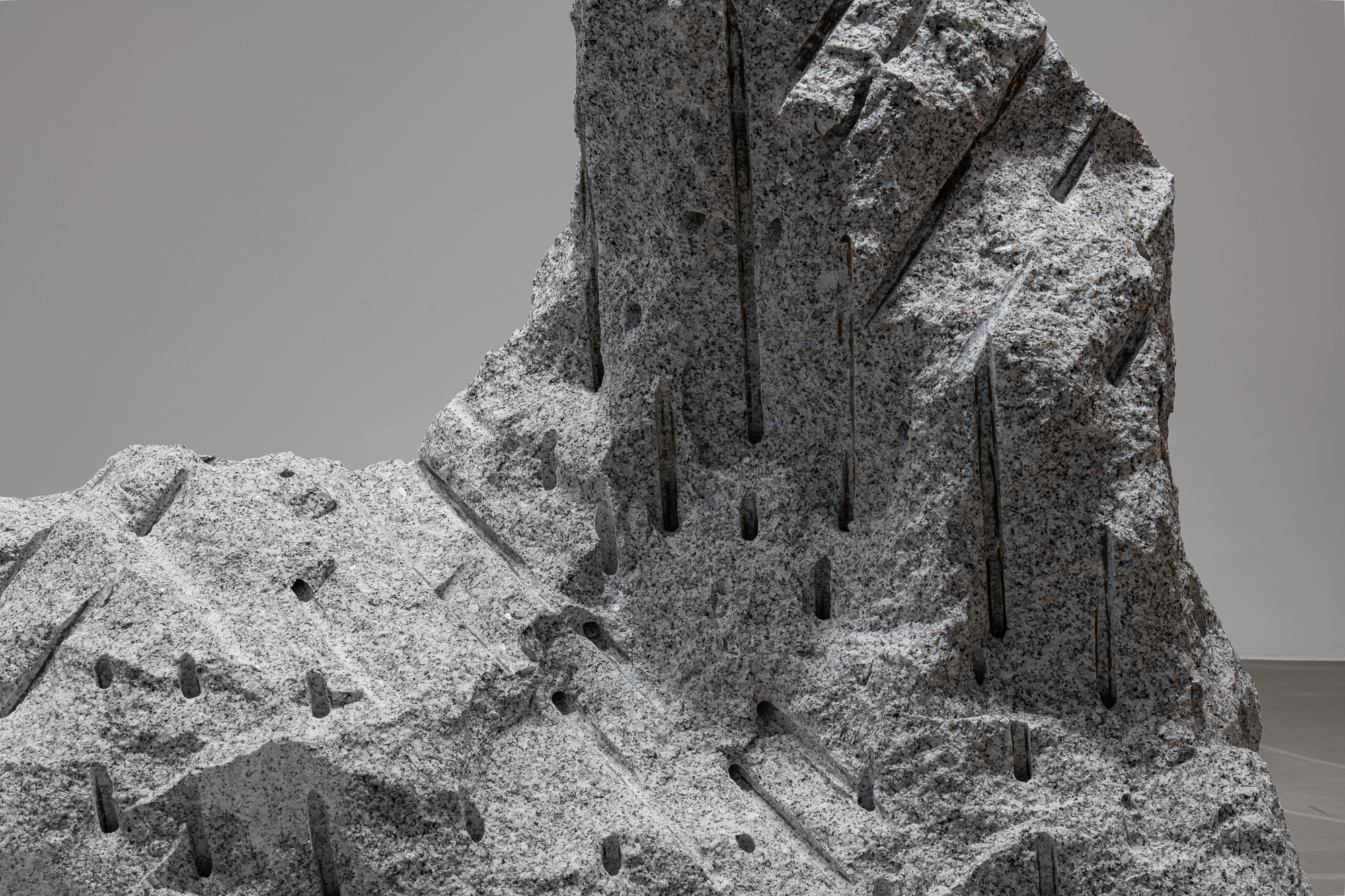
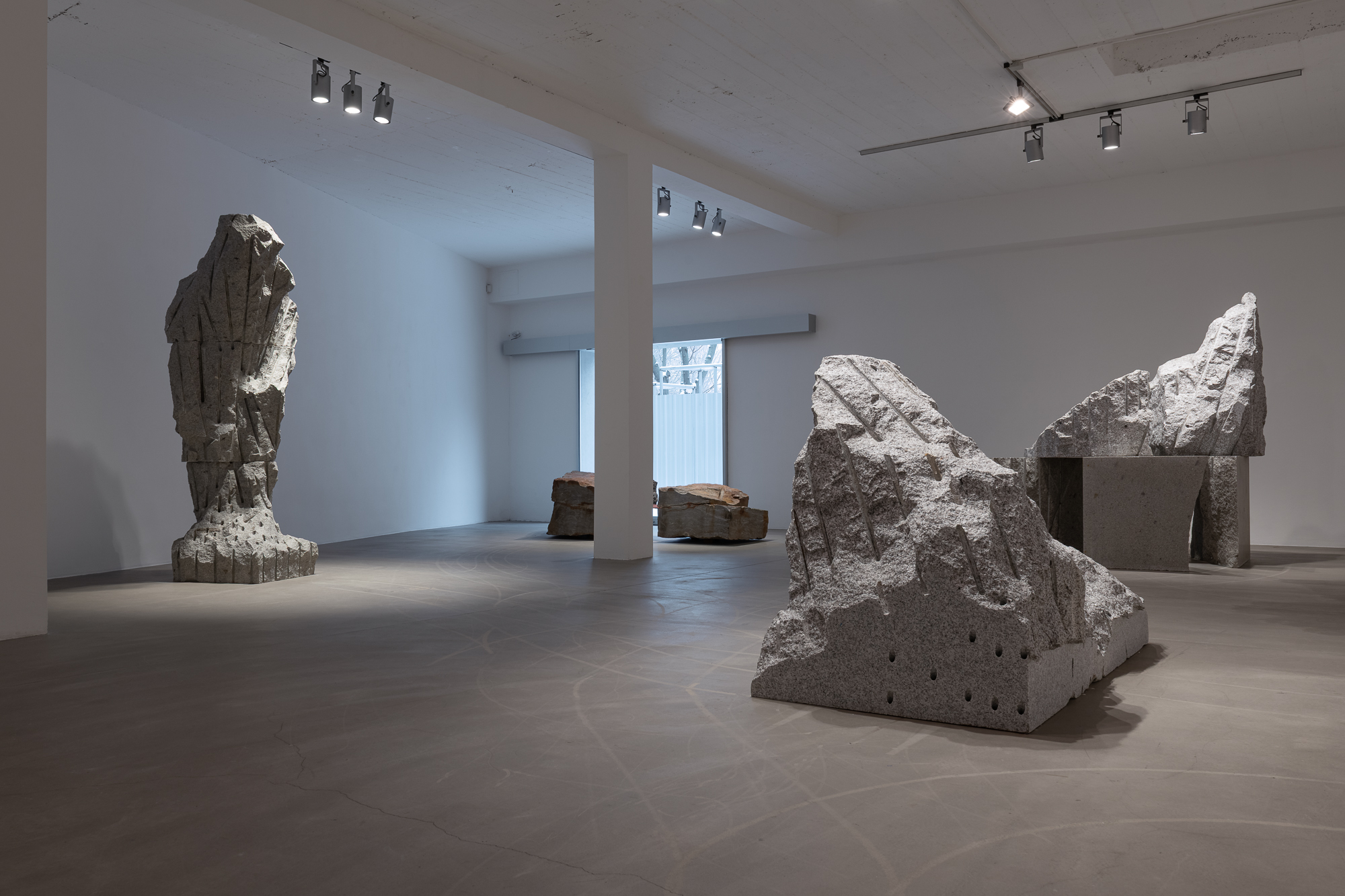
Papčo’s latest works emerge from the same movement of extraction, tension, and impulse. The artist explores processes of transformation through drilling and revealing—operations inherent to traditional stone-carving techniques. The sculptures exist in a liminal zone where the mineral, usually perceived as inert, becomes a bearer of (nascent) motion. The One Who Breathes illustrates this dynamic: a form in the process of becoming, barely separated from the granite that still contains it, carries the traces of its tearing-away as signs of a mineral birth. A mass of stone, marked by direct drillings during extraction, retains traces of its separation. The sculpture appears as a transitional state, a witness to the tension between stillness and motion, between the form already contained and the form being born.
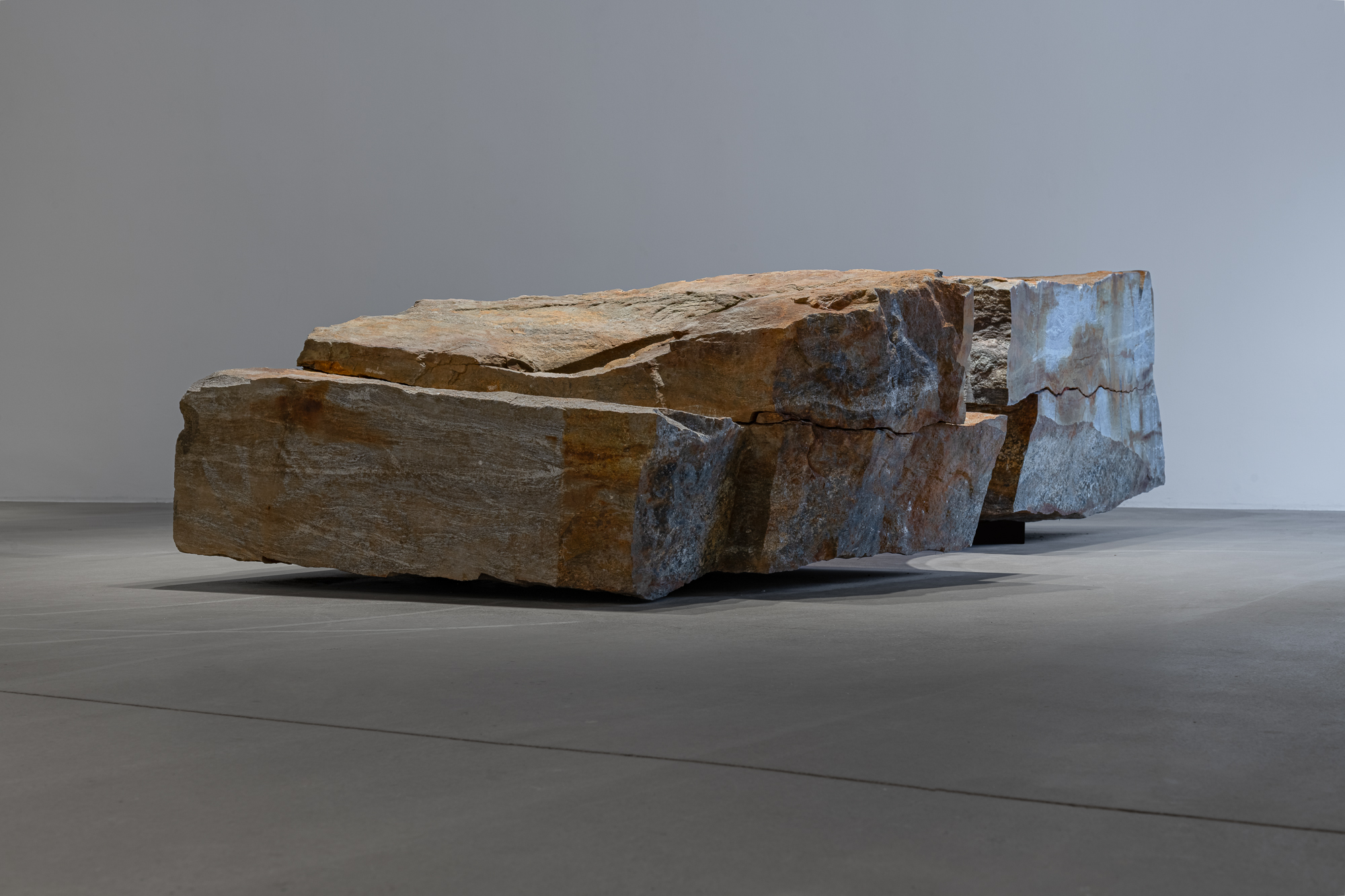
We uncover open blocks, split surfaces, tilted or carved volumes in which the stone seems to hesitate between collapse and movement. Štefan Papčo visualizes a frozen moment within a larger process—a process in which matter detaches, liberates itself, and seeks a new stand. The strength of the work stems precisely from this “extracted” feeling of tension. It is a tension directed toward something that remains out of reach—an illusion, a dream, a creative awakening, or a search for perfection.
Time began to deform, to lengthen and contract according to mood. (2)
Other works from the Becoming series—The One Who Became, The One Who Waits—also capture a suspended moment. This moment, when time ceases to follow a linear course, turns an hour into a day and concentrates perception on inner intensity. The sculptures appear held in a state of uncertain awakening, embodying not a figure but a state of consciousness—breath, waiting, expectation—in which a person becomes someone else. Their forms evoke a campsite: a chosen instant when one stops to reconfigure one’s strength and clarify one’s view of the world. Here, “to become” means moving toward the unknown. The motif of the sculptures can also refer to the climbing experience of a bivouac: a pause during which bodily and mental positions are reassessed. These works seem to inhabit a fragile space between what we leave behind and what we move toward.
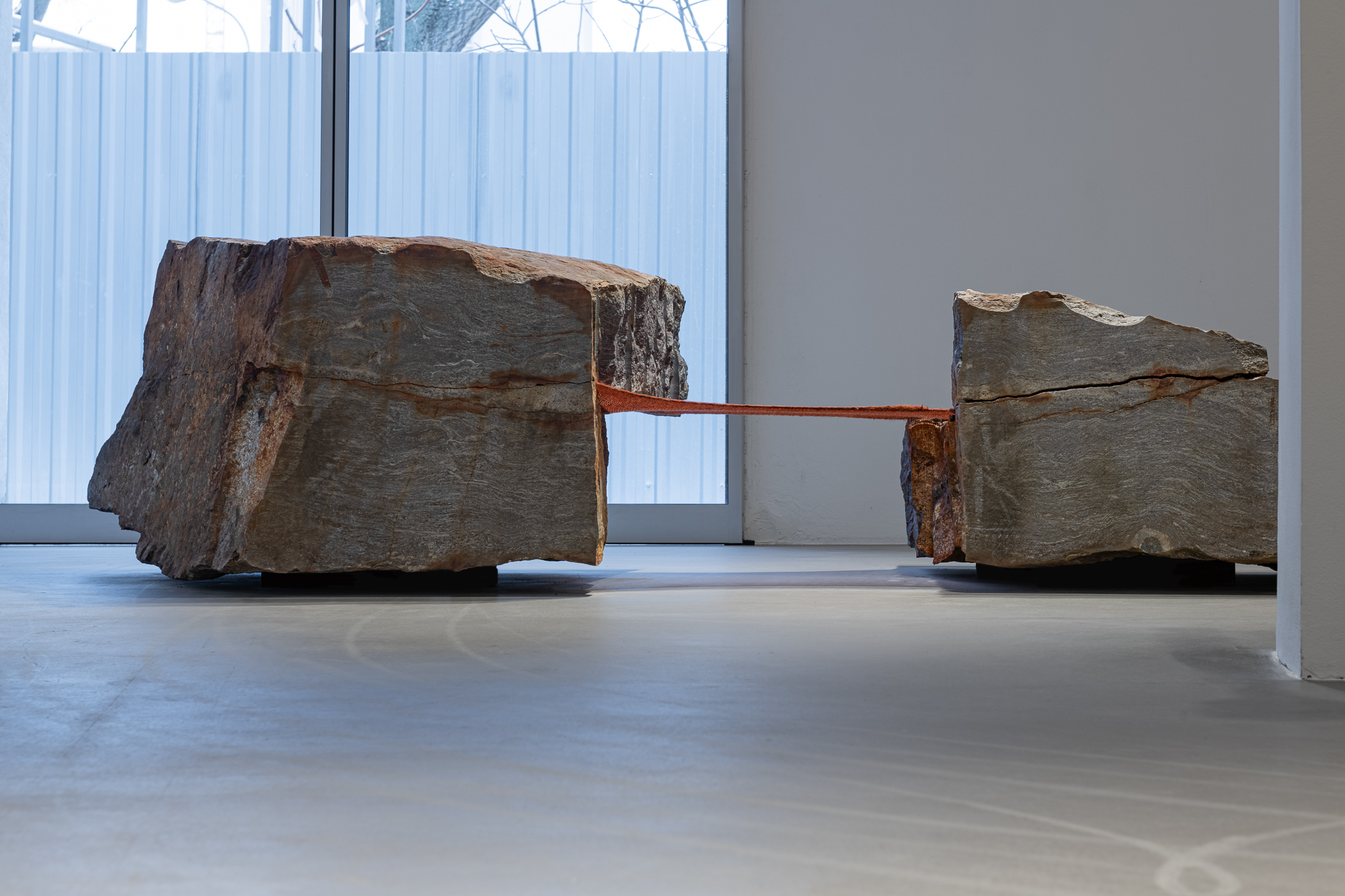
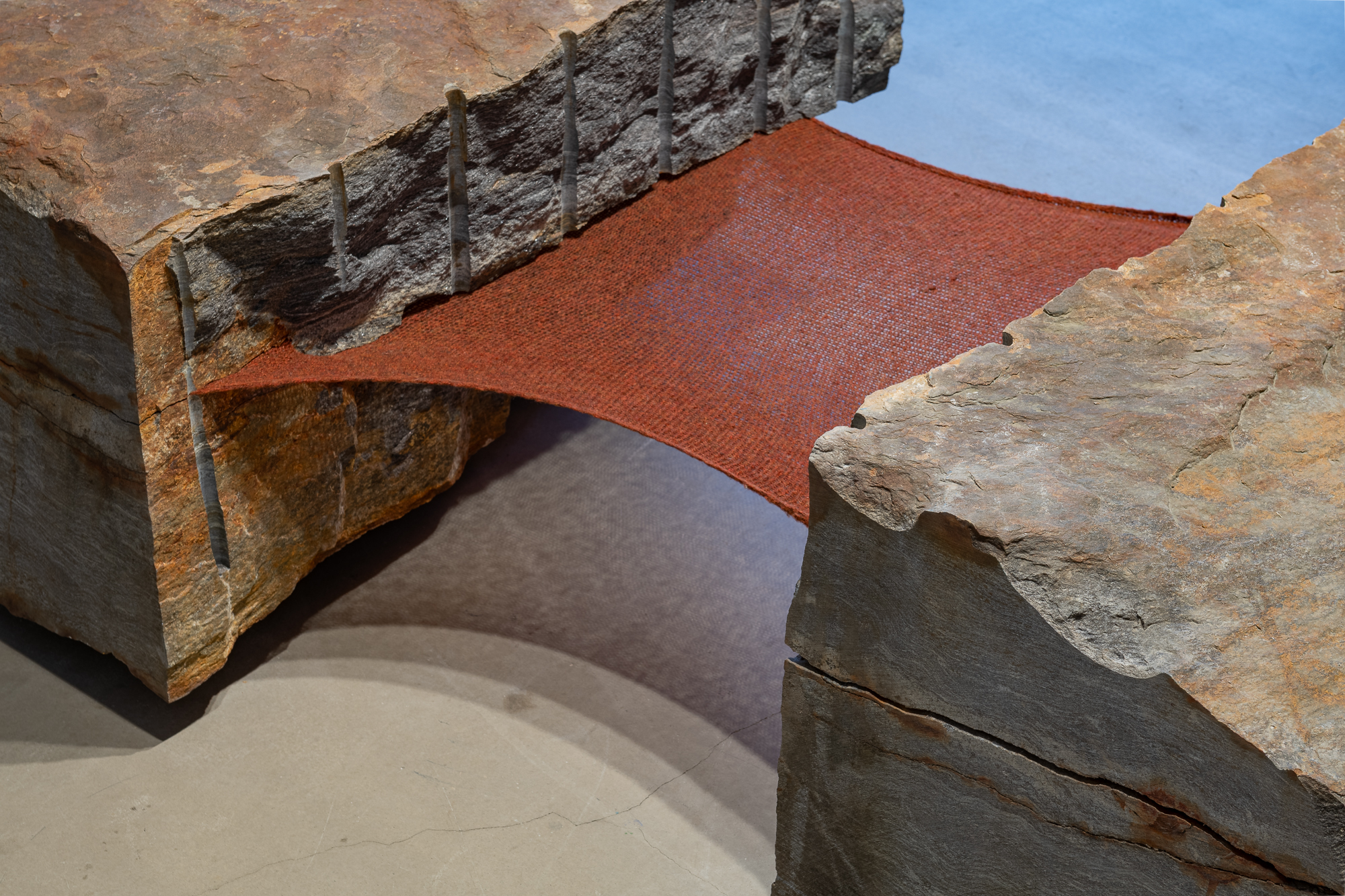
Fourth Step employs minimal and abstract gestures. Here, the fracture and seam, as well as a fragment of fabric integrated into the stone, create “micro-situations” in which the human gesture becomes inscribed in geological time. The work materializes an encounter between layers of matter and human traces in a logic where articulation gains more significance than resolution. The intervention, far from contradicting the mightiness of the material, emphasizes its stratification: mineral seams interwoven with traces of presence, labor, or thought. Through Fourth Step, the viewer can perceive a shift, an uplift, a “step toward eternity”—not in a mystical sense, but as an experience of intensified time in which each advance seems to approach something beyond the individual.
Štefan Papčo’s recent work presents sculpture as a genuine field of experience where time, emotion, and form meet. His sculptures capture transitional states—breaks, inclinations, hesitation, suspension. These gestures condense the relationship between gravity and momentum. Nothing is immutable; the stone, though massive, appears animated by inner tension, ready to slip, straighten, or cross a threshold.
The artist does not seek monumentality but precision: to make visible the moment when material opens, when a figure detaches, when movement is born before it becomes. Everything rests on an honest relationship to the forces at play—gravity, fatigue, uncertainty, the desire to move forward. This honesty provokes and invites us: how do we engage in this exploration of senses and consciousness? What part of our own lives resonates in these works? Through which transitional states do we pass? In this space of tension, the sculptures become shifting points and thresholds that allow us to perceive art not as an object but as a lived experience—fragile, unfinished, yet fully meaningful.
(1,2) Bernadette McDonald, Art of Freedom. The Life and Climbs of Voytek Kurtyka, 2019, p.148,142
Supported using public funding by Slovak Arts Council 
Štefan Papčo | Becoming
kurátorka: Silvia Van Espen
13.12. 2025 – 27.3. 2026
Zahorian & Van Espen Mierová, Bratislava
Jedine v umení prispieva chýbajúca súčasť k celkovému významu.(1)
Výstava Becoming predstavuje súbor aktuálnej tvorby Štefana Papča (1983), ktorý nadväzuje na jeho úvahy o prechodných stavoch, prahoch, formách skúseností, kde sa stretáva hmota, telo a vedomie. Štefan Papčo už dávno začlenil do svojej práce „gramatiku“ horolezectva, čím naznačil, že umenie, podobne ako horolezectvo, je hľadaním, ktoré nemá za cieľ dosiahnutie ani ovládnutie, ale skôr jasnosť: uznanie krehkosti, prijatie nedokončenosti a pochopenie, že „chýbajúca časť“ môže prispieť k významu celku.
Najnovšie diela Štefana Papča vychádzajú z rovnakého pohybu extrakcie, napätia a impulzu. Autor skúma procesy transformácie – pomocov vrtov a odhaľovania, ktoré sú vlastné pôvodnej technike spracovania kameňa. Sochy sa nachádzajú v liminálnej zóne, kde sa minerál, tradične vnímaný ako nehybný, stáva nositeľom (vznikajúceho) pohybu.
The One Who Breathes ilustruje túto dynamiku: forma v priebehu vzniku, sotva oddelená od žuly, ktorá ju ešte obsahovala, nesie stopy svojho vytrhnutia ako znaky minerálneho zrodu. Masa kameňa v procese ťažby si, poznačená priamymi vrtmi, zachováva stopy po oddelení. Socha sa javí ako prechodný stav, svedok napätia medzi nehybnosťou a pohybom, medzi už obsiahnutou formou a formou, ktorá sa rodí. Objavujeme otvorené bloky, rozštiepené plochy, naklonené objemy, kde kameň akoby váhal medzi zrútením a pohybom. Štefan Papčo vizualizuje zastavený moment širšieho procesu – procesu, v ktorom sa hmota odčleňuje, oslobodzuje a hľadá si novú vlastnú polohu. Sila diela pramení práve z „vyťaženého“ pocitu napätia. Napätia smerom k niečomu, čo zostáva mimo dosahu – pocitu ilúzie, sna, tvorivého prebudenia alebo hľadania dokonalosti.
Čas sa začal deformovať, predlžoval sa a skracoval, podľa nálady. (2)
Ostatné diela zo série Becoming – The One Who Became, The One Who Waits – rovnako zachycujú pozastavený okamih. Tento okamih, keď čas prestáva podliehať lineárnemu postupu, premení hodinu na deň a sústredí vnímanie na vnútornú intenzitu. Sochy sa javia ako zadržané v stave neistého prebudenia, stelesňujúce nie postavu, ale stav vedomia – dych, čakanie, očakávanie, v ktorom sa človek stáva iným. Podoba diel pripomína táborisko – vybraný moment, keď sa človek zastaví, aby prekonfiguroval svoje sily a vyjasnil si videnie sveta. Tu „stať sa“ znamená postupovať smerom k neznámemu. Motív sôch môže odkazovať aj na horolezeckú skúsenosť bivaku: prestávku, počas ktorej sa prehodnocujú telesné a mentálne pozície. Tieto diela akoby obývali krehký priestor medzi tým, čo opúšťame, a tým, k čomu smerujeme.
Fourth Step využíva minimálne a abstraktné gestá. Tu zlomenina a šev, ako aj fragment tkaniny integrovaný do kameňa, vytvárajú „mikrosituácie“, v ktorých sa ľudské gesto zapisuje do geologickej časovosti. Dielo materializuje stretnutie vrstiev hmoty a ľudských stôp v logike, kde artikulácia nadobúda väčší význam ako rozuzlenie. Zásah, ďaleko od toho, aby protirečil mohutnosti materiálu, zdôrazňuje jeho vrstevnatosť: minerálne sloje pretkané stopami prítomnosti, práce alebo myslenia. Prostredníctvom Fourth Step môže divák vnímať posun, povznesenie, „krok k večnosti“ – nie v mystickom zmysle, ale ako skúsenosť zintenzívneného času, kde každý pokrok, zdá sa, približuje k niečomu, čo presahuje jednotlivca.
Aktuálna tvorba Štefana Papča predstavuje sochárstvo ako skutočné pole skúseností, kde sa stretávajú čas, emócie a forma. Jeho sochy zachytávajú prechodné stavy – zlomy, naklonenie, váhanie, pozastavenie. Pomenované javy zhusťujú vzťah medzi gravitáciou a hybnosťou. Nič nie je nemenné; kameň, hoci masívny, sa zdá byť oživený vnútorným napätím, pripravený skĺznuť, narovnať sa alebo prekročiť prah.
Autor nehľadá monumentalitu, ale presnosť: zviditeľnenie okamihu, keď sa materiál otvára, keď sa postava oddeľuje, keď sa pohyb rodí, ešte skôr ako sa stane. Všetko spočíva v úprimnom vzťahu k prítomným silám – gravitácii, únave, neistote, túžbe ísť ďalej. Úprimnosť, ktorá nás provokuje, vyzýva: Ako sa zapojiť do tohto skúmania zmyslov a vedomia? Aká časť nášho života rezonuje v týchto dielach, akými dočasnými stavmi prechádzame? V tomto priestore napätia sa sochy stávajú nestálymi bodmi a prahmi, ktoré nám umožňujú vnímať umenie nie ako objekt, ale ako prežitú skúsenosť, krehkú, nedokončenú, ale plne významnú.
(1,2) Bernadette McDonaldová, Kurtyka, Poľská hviezda svetového horolezectva, 2019, str..148,142
Projekt podporil z verejných zdrojov Fond na podporu umenia